
Can Hard Water Stains Be Removed From Natural Stone Showers?

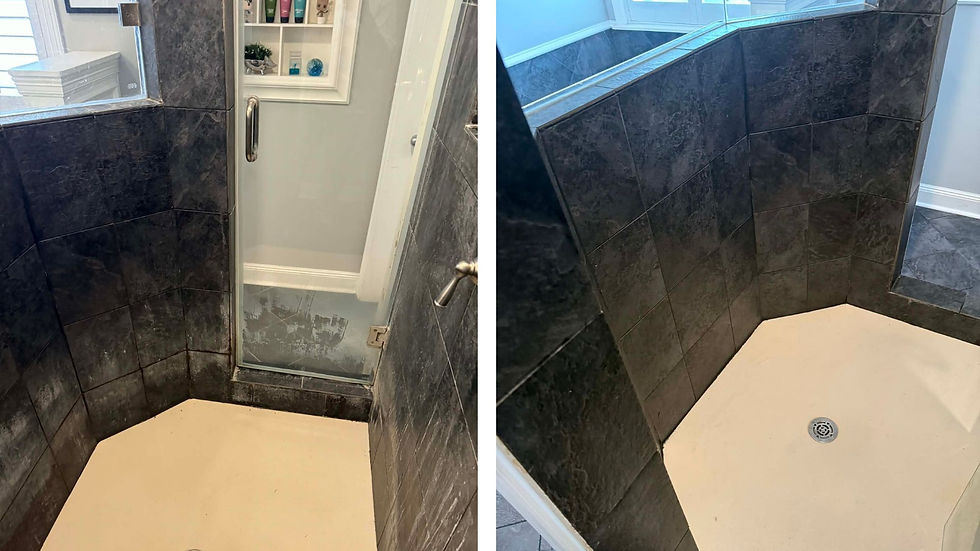
This is one of the most common questions homeowners ask once their shower starts to look cloudy, dull, or uneven. In this project near Banyan Park in Grapevine, the natural stone shower had reached that exact point. The walls and pan were covered in visible hard water scale, and the darker stone made the buildup stand out even more.
At a glance, it looked like permanent damage. The surface had lost its depth, the finish looked muted, and there was a noticeable film that didn’t come off with regular cleaning. The assumption was that the stone might be ruined or would need to be replaced.
The short answer is yes, hard water stains can often be removed from natural stone showers, but only if the issue is buildup and not permanent etching. Understanding that difference is what determines whether restoration is possible.
What Hard Water Stains Actually Are on Natural Stone
Hard water stains are not just “dirt” or soap scum sitting on the surface. They are mineral deposits left behind when water evaporates, primarily made up of calcium and magnesium. Over time, these minerals build up layer by layer, creating what is often referred to as scale.
On natural stone, this buildup behaves differently than it does on glass or tile. Stone surfaces are more reactive and often slightly porous, which allows minerals to bond more aggressively. According to guidance from the Natural Stone Institute, mineral deposits can adhere to stone surfaces and alter their appearance if not removed with appropriate methods.
As the buildup thickens, it creates that cloudy or chalky look that many homeowners mistake for permanent damage.
The Difference Between Hard Water Buildup and Etching
One of the biggest reasons people struggle with this issue is that buildup and etching can look similar, but they are completely different problems.
Hard water buildup sits on top of the stone. It can often be removed with the right process because it hasn’t changed the material itself. Etching, on the other hand, is a chemical reaction that affects the surface of the stone. It happens when acidic substances react with the calcium in materials like marble or travertine, leaving behind a dull or rough spot.
Many general cleaning guides mention using acidic solutions like vinegar to remove hard water stains. While that can work on non-sensitive surfaces, it can actually cause etching on natural stone, which makes the problem worse instead of better. This is why industry sources consistently warn against using acidic cleaners on stone surfaces.
Knowing whether you’re dealing with removable scale or surface damage is what determines the outcome.
Why Hard Water Stains Build Up Faster in Showers
Showers create the perfect environment for mineral buildup because water is constantly being introduced and then evaporating. Every time the surface dries, a small amount of mineral content is left behind.
In areas like Grapevine, where water hardness can be moderate to high, this process happens faster. Add in soap residue and body oils, and you end up with a surface that not only collects minerals but also traps them more effectively.
Over time, the combination of these elements creates a layered buildup that becomes harder to remove with basic cleaning methods.
Why DIY Cleaning Often Doesn’t Work on Natural Stone
Most homeowners try to address hard water stains with store-bought cleaners or home remedies. The problem is that these approaches are usually designed for surfaces like glass or ceramic tile, not natural stone.
Non-acidic cleaners are often too mild to break down heavy mineral deposits, while acidic cleaners can damage the stone itself. Even when a cleaner seems to improve the surface temporarily, it may not be removing the buildup completely. Instead, it can leave behind residue or only affect the outer layer.
Another issue is that DIY methods typically focus on wiping or scrubbing, which does not address how firmly these deposits are bonded to the surface. Without the right process, the buildup either remains or returns quickly.
What Was Happening in This Shower
In this particular shower, the dark stone made the scale buildup especially visible. The walls had a cloudy film, and the pan showed clear signs of mineral accumulation that had built up over time.
Once the restoration process began, it became clear that much of what looked like damage was actually heavy buildup. As the deposits were carefully removed, the natural color and variation of the stone started to come back.
The change wasn’t just visual. The surface also felt different, smoother and more consistent, which is another sign that the issue was on top of the stone rather than within it.
How Natural Stone Shower Restoration Works
Restoring a natural stone shower requires a controlled process that removes buildup without damaging the surface underneath. This is where the difference between cleaning and restoration becomes important.
The goal is to break down and remove mineral deposits while preserving the integrity of the stone. That involves using the correct chemistry, techniques, and tools designed specifically for stone surfaces. The process is gradual and controlled because aggressive methods can create new problems even if they remove the buildup.
Once the scale is removed, the surface can be evaluated for any underlying etching. In many cases, removing the buildup alone is enough to dramatically improve the appearance.
Can All Hard Water Stains Be Removed?
Not every shower can be restored to a like-new condition, and it’s important to be realistic about expectations. If the stone has been etched or physically worn, those changes cannot be reversed through cleaning alone.
However, many showers that appear severely damaged are actually covered in buildup that can be removed. This is why proper evaluation matters before deciding on replacement. What looks permanent at first can often be corrected once the surface is properly treated.
What This Means for Your Shower
If your natural stone shower looks cloudy, dull, or uneven, there is a good chance you are dealing with hard water buildup rather than permanent damage. The key is identifying the problem correctly and avoiding cleaning methods that can make it worse.
This project is a good example of how misleading surface appearance can be. What looked like a damaged shower turned out to be a buildup issue that could be removed with the right process.
Understanding that difference can save homeowners from unnecessary replacement and help restore the original look of the stone.


Comments